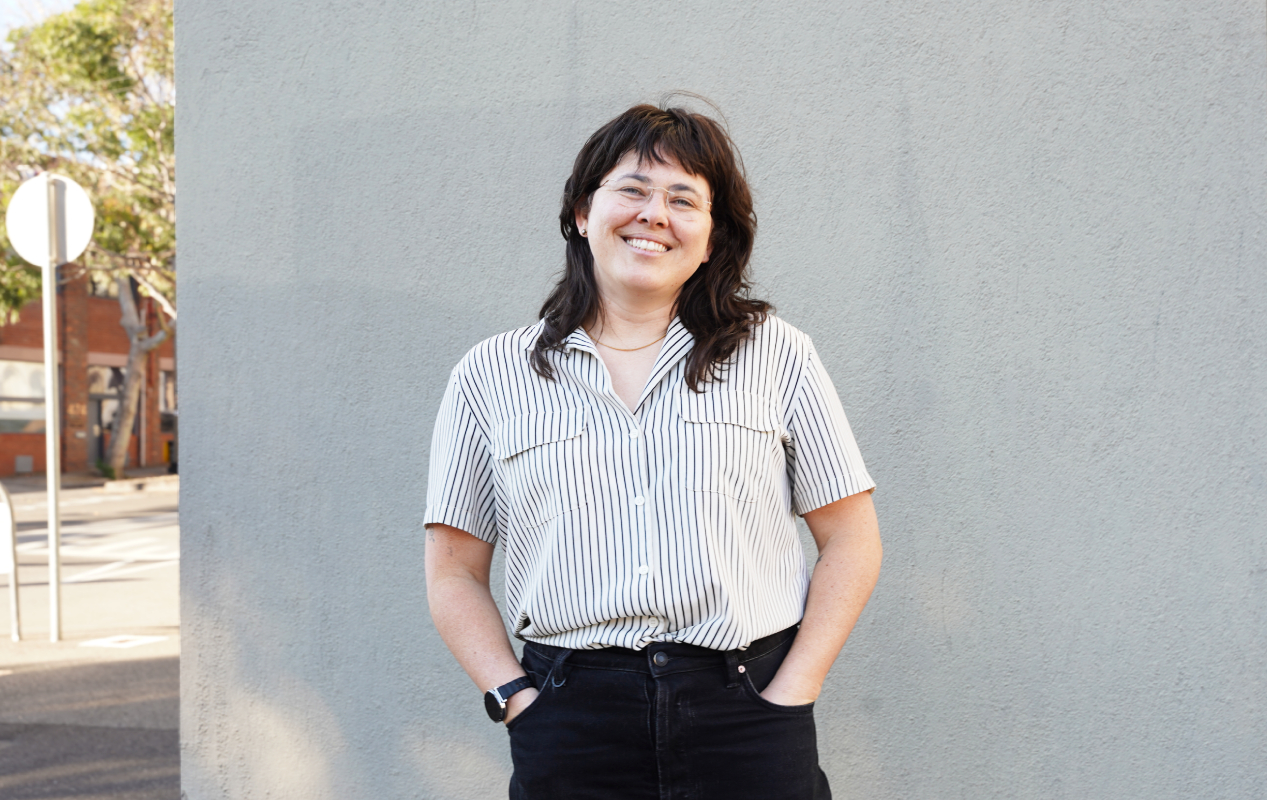
As a school lawyer, Isabella Jones is more likely to be found in jeans and a t-shirt than in a suit. A graduate lawyer with Inner Melbourne Community Legal Centre (IMCL), Isabella splits her week between working with school students and at IMCL’s other programs.
What exactly does a school lawyer do? Based at a flexible learning school in the inner city, Isabella welcomes any young person who needs free legal help. “Often the people we work with have difficult circumstances that have made their lives tricky or they just have extra burdens to carry,” she says. “I’m really grateful that I get to assist them with lightening the load.”
Young people seek help for a variety of issues: they may have a charge for drug possession, weapons offences or low-level assault, or they may be experiencing family violence, issues with their rental, or might not know what to do about a fine.
Isabella helps them figure out what to do next. And if the problem is beyond the legal scope, she works with on-site youth workers and health staff to get the young person the support they need. “Young people who may be in touch with the criminal system are often coming from situations that are traumatic or difficult,” she says.
Isabella sees the school lawyer role as unique within the youth sector. “We’re on site, meeting young people where they’re at, removing at least one barrier to legal assistance. There’s this sense of ‘Wow, this person is completely for me.’ It’s about intervening early to prevent young people from interacting with or becoming entrenched in the legal system.”
“Often the people we work with have difficult circumstances that have made their lives tricky or they just have extra burdens to carry.”
Legal advice can be life changing. Without a lawyer, a young person facing a weapons charge, for example, may get a conviction and criminal record, further deepening their relationship with the system. With Isabella, their sentence could look drastically different. “First, we’d be analysing whether the criminal charge can even be made out. If there’s evidence to prove the offence, we talk with the young person to understand their circumstances, both at the time of the offending and their general background. This type of information can make their sentence look so different and can help the magistrate make a fairer assessment.”
A former youth worker and soccer coach, Isabella has always enjoyed working with young people. “They’re fun, irreverent and honest, which I appreciate,” she says.
She would love to see a future where young people are supported and understood, not criminalised for being marginalised or disenfranchised. “I think it’s unfair for young people to have fewer rights than adults but be treated with adult consequences,” she says. “Young people can be patronised as too young to be independent but then face prison or other harsh outcomes that can affect their lives for a long time. I would like to see young people treated with respect and have their views and opinions given the weight that they deserve.”
If you're a youth-sector worker and would like to share your story, or want to request a content-related update, get in touch.