
Being prepared for a flood will help you to know what to do if and when the time comes. Being prepared can make you feel empowered to help your community and keep yourself and your loved ones safe.
A flood is any overflow of water onto land that is normally dry. The major causes are:
- water rising beyond it’s normal height
- rising ocean levels causing coastal flooding
- extremely heavy rain causing flash flooding.1
Riverine flooding – occurs when water rises and flows over it’s banks onto nearby land. This is the most common type of flooding in Australia. This occurs in places like lakes, rivers, creeks, reservoirs, canals and dams.1
Flash flooding – occurs because of intense rain. This can occur anywhere but often occurs in urban areas where rain rapidly runs off roofs and concrete surfaces and doesn’t have anywhere to go.1
Estuarine flooding – estuaries are bodies of water such as tidal lakes, lagoons, wetlands, and rivers where freshwater and saltwater mix. Flooding in estuaries is caused by a combination of coastal and riverine impacts and changes.1
Coastal flooding and erosion – caused by ocean changes such as high tides, storm surges, and large waves. The highest tides, known as 'king tides', can cause minor flooding of low-lying areas.1
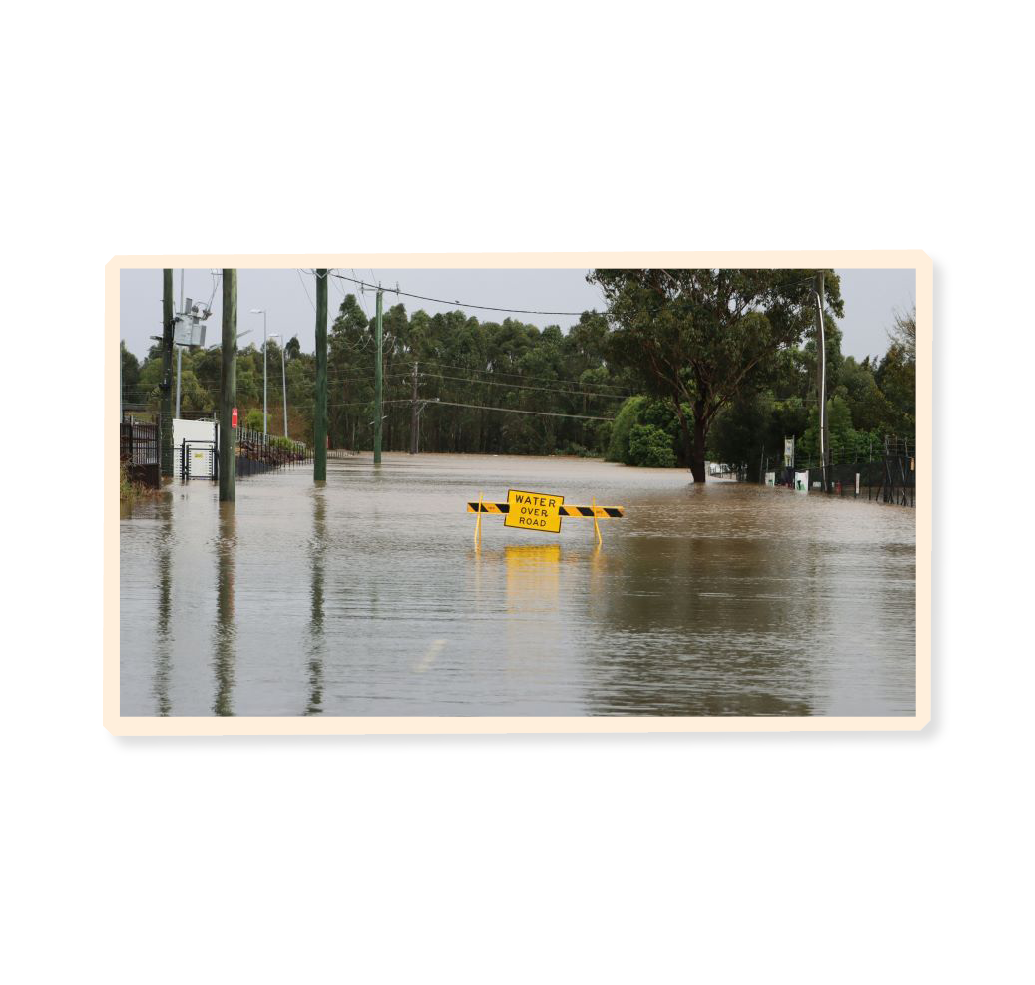
A flooded road, with a yellow sign reading 'water over road'.
-
Move to a higher point like a kitchen bench or table or second story
-
Call your family, friends and neighbours to check they know what’s happening.2
-
Turn of all gas and electricity
-
Take your pets, phone, clothes and medication
-
Check for road closures before you leave.2
-
Seek shelter indoors if you can, away from floodwaters.
-
Stay away from trees, drains, low-lying areas, creeks, canals.
-
Avoid walking through floodwater, dangerous debris can be under the surface that you can't see and the water may contain dangerous toxins and contaminants that could make you sick.2
-
Be aware of your surroundings and always know where higher ground is and how to get there.
-
Pay attention to flood indicator signs on your way into the camp site
-
Know where the nearest shelter is.
-
Inform family or friends where you are planning to camp.
-
Don’t camp under trees, in a storm, trees can drop branches without warning.
-
Never drive through floodwater, 15cm of flowing water is enough to float a car
-
Tune into emergency broadcasters like ABC local radio too keep up with local conditions
-
Look out for hazards, like mud, debris, damaged roads, fallen trees
-
If driving conditions get dangerous, pull over on higher ground.2
- Vic Emergency Hotline: 1800 226 226
- Wildlife Welfare: 136 186
- Life threatening emergencies: 000
- Vic State Emergency Service (SES): 132 500
- Download the Vic Emergency and Australian Red Cross RediPlan app
- Australian Climate Service. Floods. Australian Climate Service. N.d. Accessed June 5, 2024. https://www.acs.gov.au/pages/floods
- Victoria State Emergency Service. Flood – plan and stay safe. N.d. Accessed June 5, 2024. https://www.ses.vic.gov.au/plan-and-stay-safe/emergencies/flood